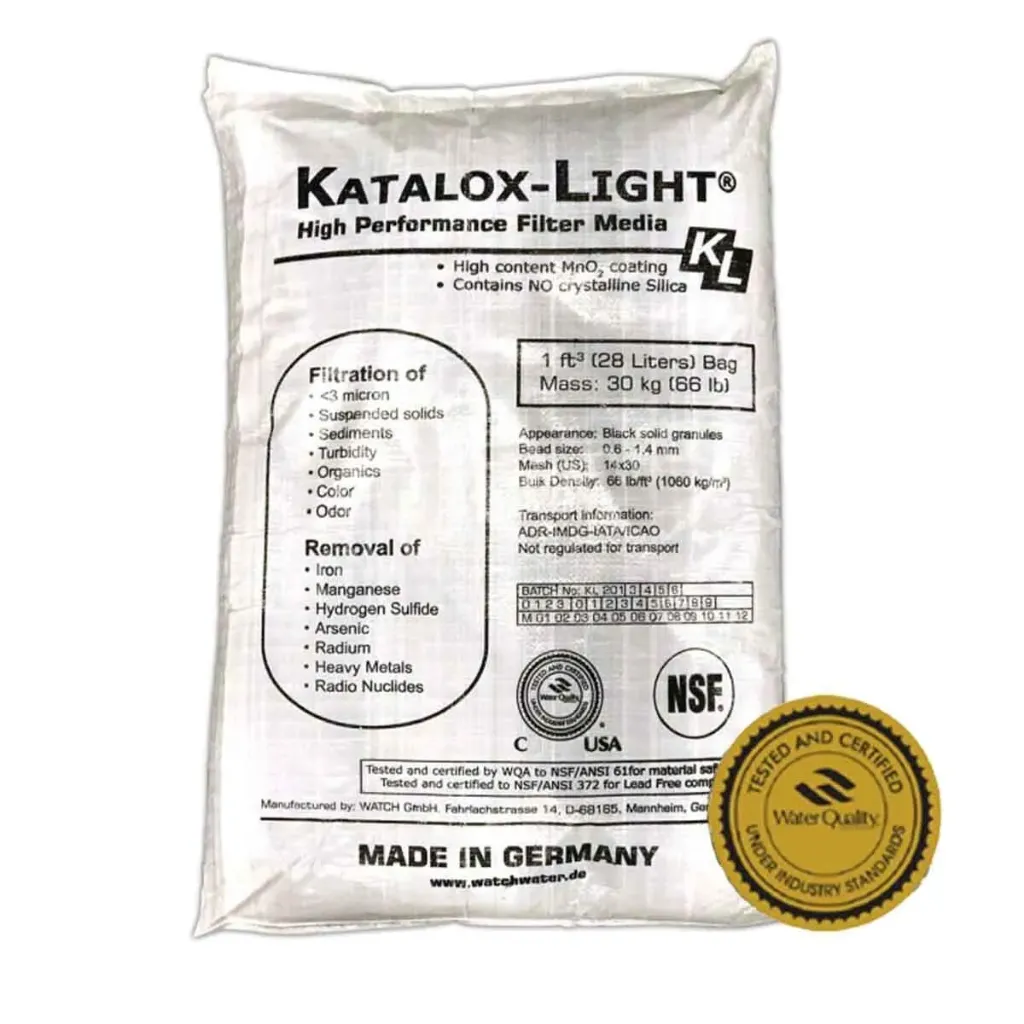
✅ Какво е Katalox Light
- Каталокс Лайт е каталитичен гранулиран филтърен материал, базиран на зеолит (или подобна основа), покрит с висок процент (~ 10%) манганов диоксид (MnO₂) на повърхността си.
- Покритие му придава висока повърхностна площ и каталитични свойства, което му позволява да премахва не само суспендирани твърди частици: той може също да окислява и утаява разтворени метали и съединения (желязо, манган, водороден сулфид), които след това се филтрират.
🧪 Какво премахва Katalox Light / Какво прави
Каталокс Лайт се използва за:
Премахване на желязо (Fe²⁺) и манган (Mn²⁺) от вода — дори при относително високи концентрации в сравнение с по-простите медии.
Премахване на водороден сулфид (H₂S) — ефективно намалява миризмата на гнило яйце и съдържанието на сяра в кладенчовата вода.
Филтрация на суспендирани твърди частици, мътност, седименти и дори намаляване на тежки метали, радионуклиди, някои арсеник и други замърсители чрез каталитична оксидация и ко-преципитация (в зависимост от състава на водата и наличието на желязо като помощно средство).
Фина филтрация до няколко микрона (често ~3 µm), което подобрява яснотата на водата и намалява натоварването с частици.
✅ Предимства в сравнение с други медии (напр. пясък, по-прости каталитични медии, Бирм и др.)
- Поради високото съдържание на MnO₂ покритие и каталитично действие, Katalox Light често превъзхожда стандартните медии като пясък, Birm, “Greensand Plus” или некалциран зеолит — особено във вода с високо съдържание на желязо/манган или с водороден сулфид.
- Той обикновено изисква по-малко поддръжка в някои инсталации: без (или ограничена) химическа регенерация — често без химикали, ако е проектиран правилно.
- Тъй като медията е относително лека (обемна плътност около водата), консумацията на вода за обратно промиване е по-ниска в сравнение с по-тежките медии, което е предимство за домакински или малки системи.
⚠️ Какво да проверите и вземете предвид (Ограничения / Най-добри условия)
- Както при всяко катализаторно средство, pH на водата, нивото на кислород и дебитът влияят на производителността. Например, окисляването изисква определени условия, за да работи правилно.
- В някои случаи (особено при високи нива на манган или водороден сулфид) може да се препоръча окислител (напр. въздух, кислород, понякога химически окислители), за да се увеличи производителността, особено при натоварвания с висока интензивност.
- Важно е да не смесвате Katalox Light с други медии с различна плътност или химическо поведение — смесването на медии може да доведе до лошо наслояване, каналиране или влошена производителност.
- Когато е заредено в резервоара за филтриране, трябва да оставите подходящ свободен обем (въздушно пространство над слоя медия), за да позволите разширение и обратно промиване — указанията на производителя обикновено препоръчват ~ 30–40 % свободен обем.
📦 Типична опаковка и срок на годност
- Каталокс Лайт обикновено се продава в чували от ~30 кг (~1 кубически фут / 28–30 Л).
- С правилна експлоатация и поддръжка, медията може да издържи 7–10 години или повече, преди да е необходима подмяна.

Свържете се с нас
Независимо дали имате въпроси, обратна връзка или нужда от помощ, нашият екип е тук, за да помогне. Просто попълнете формуляра по-долу.
Благодарим ви, че се свързахте с нас!